|
|
|
|
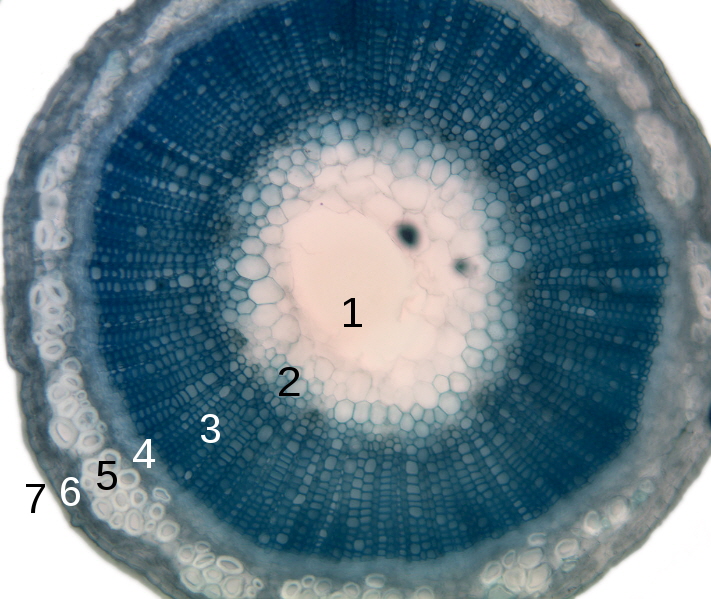
Cross-section of a flax stem where 1= pith, 2 & 3= xylem, 4= phloem, 5= bast fibre, 6= cortex and 7= epidermis
|
|
a) Flax stem structure and retting
b) Dew retting flax
c) Water retting flax
a) Flax Stem Structure and Retting
Flax stems consist of a stiff central core (or xylem) surrounded by an ‘inner bark’ (the phloem) and an outer skin (dermal tissue, cortex & epidermis).
The central core is a hollow pith surrounded by woody xylem. Its function is to provide support and to transport water in the living plant. It is often referred to as shives or boon when stripped from the stem, and it then looks like stiff straw. It constitutes around 70% of the stem and can be used for animal bedding and for soil erosion control.
The inner bark (or phloem) surrounds the core. When the flax plant is growing, the main function of the phloem is to carry organic nutrients to all parts of the plant. The flax or bast fibres are part of the inner bark. The flax fibres are arranged in bundles inside the phloem and they help to give the plant mechanical strength. This type of fibre is known as bast fibre (nettles, hemp and jute are other examples of bast fibres). The bast fibres are stuck together with a ‘glue’ formed of pectins and lignins. When you ret flax, mould, warmth and humidity dissolve this ‘glue’ and loosen the fibre.
There are two ways of retting flax, water retting and dew retting. Dew retting takes longer, but is much easier for a beginner, it is also much less smelly than water retting. Dew retting produces a darker, more silver fibre than water retting, which tends to produce a more golden colour.
b) Dew Retting Flax
|
|
|
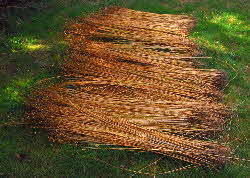
newly harvested flax laid out for dew-retting on grass
|
|
Spread your flax thinly on a lawn or grass field, so that you can still see the grass through the flax; make sure all the roots point in the same direction. Turn the flax once a week, so that it rets evenly. If the weather is dry, water the plants with a watering can. Dew retting takes between 3 and 6 weeks, depending on the weather. The process is easy but the trick is to know when the fibres are retted.
After the first three weeks have passed, pick one stem with both hands and gently break it. Wiggle the stem and gently bend it. If the fibre separates easily from the core, retting may be complete. Bring the fibre indoors to dry.
Several books say that if the fibre comes away in ribbons it is insufficiently retted. However, I found that when I waited for the ribbons to ret into individual fibres my flax became over-retted and the fibres broke into small pieces. You can still use over-retted fibres by carding them with wool or using them in paper making.
c) Water Retting Flax
Put the flax in water, for example inside a water butt, paddling pool or an old bath. You might need to put a weight on top to keep the fibre submerged. The fibre usually rets in about five days.
Back to:-
Growing Flax,
Sowing Flax and
Harvesting Flax
On to Breaking Flax.
Top of page
|