|
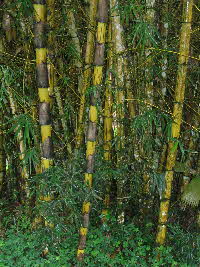 Bamboo Silk Fibre Bamboo Silk Fibre
Bamboo is a very-fast growing grass that can produce shoots of up to a metre per day. It is ready for harvesting in 4 years and does not require re-planting as the extensive root base sprouts new shoots readily. It is therefore a highly sustainable plant to grow.
The fibre is produced either mechanically or chemically.
In the mechanical process, the woody stems are crushed and natural enzymes break down the stems so that the fibres can be combed out and spun, as in the production of flax. This labour-intensive process is used to produce bamboo linen.
In the chemical process, the bamboo is again crushed but leaves and pith may both be used. In older factories, the chemicals are sodium hydroxide and carbon disulphide that break down the bamboo cellulose to create a viscose cellulose solution. This is forced through spinneret nozzles into a dilute acid solution where the extruded filaments solidify and re-convert into bamboo fibre threads that can be spun into a bamboo fibre yarn.
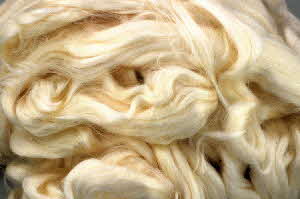 In newer, more eco-friendly factories, the Lyocell process is used with non-toxic solvents and a closed-loop process that captures and recycles 99.5% of the chemicals used. In newer, more eco-friendly factories, the Lyocell process is used with non-toxic solvents and a closed-loop process that captures and recycles 99.5% of the chemicals used.
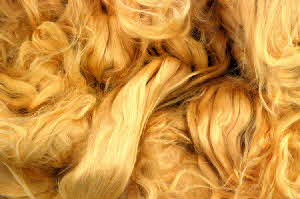
The resulting bamboo silk fibre has a natural sheen and softness that feels and drapes like silk but is less expensive and claimed to be more durable (see the Organic Clothing blog for more information).
Top of page
|