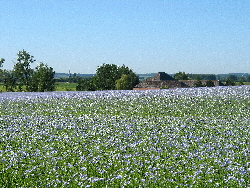
A patch of flax is a beautiful sight. Even if you have no intention of using it for fibre, this plant is worth growing for the flush of blue flowers alone. The seed pods that follow the flowers are also very decorative, and flax drying in stooks provides great interest and architectural beauty.
In the past many families grew a small patch of flax. They spun and wove the fibre to make their own bed linen and clothes. You can still do this today in a large garden or an allotment. A rolling pin, a plastic comb and a dog comb is all you need to process small amounts of fibre. If you become keen on linen production, you can acquire flax processing tools such as a flax brake, rippler, scutching knife and flax hackle.
The information below is intended as guidance for growing flax in small quantities for hand spinning. Professional flax growers may use different techniques.