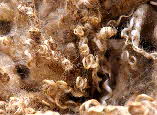
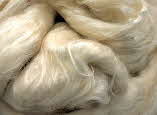
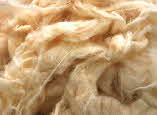
Natural Fibres include wool from sheep and fibre from alpaca, angora rabbits, cashmere and angora (mohair) goats, silk from insects (silkworms), and plant fibres such as cotton, flax and linen, nettle and hemp.
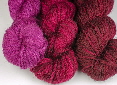
Advantages of Handspun Yarn Handspun yarn introduces an attractive unevenness to knitting in contrast to the mechanical regularity of most commercial yarns, softening lines and adding a natural look to your work. Using natural dyes on your handspun wool adds a vibrancy that comes only from hand-crafted work. Learn more about hand-spinning and the history of spinning wheels here.
We have now closed the Wild Fibres Store and all the catalogs for fibres sales but you can continue to read and learn about Natural Fibres on our web site
Wild Fibres visitors Wild Fibres visitors include weavers, spinners & dyers, re-enactors and anyone who wants to learn more about natural fibres. If you are spinning or dyeing with natural dyes, you will want to use your dyes on natural fibers and textiles. For re-enactors looking to re-create authentic period costume for Anglo-Saxon, Viking, medieval or Elizabethan re-enactment, you will need to use natural fibres that are authentic to the period and to dye them with the period natural dyes. Learn about historical use of natural fibres and textiles here.
If the font is too small, “Ctrl +” on your key board should make it larger (“Ctrl -” makes it smaller) Press the Control key and the plus key at the same time, repeatedly.
Teresinha at Wild Fibres Birmingham B42 1EY, UK (contact us by email)
Contact Teresinha for enquiries on Tel: +44 (0)7979 770865 email: info@wildfibres.co.uk